
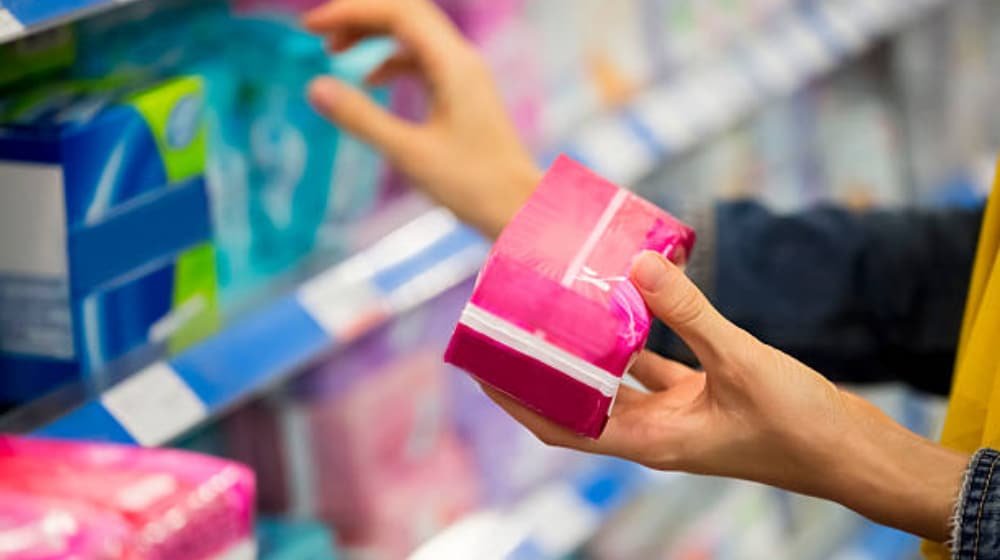
A division bench of the Lahore High Court’s Rawalpindi Bench on Thursday dismissed the Federal Board of Revenue’s (FBR) objection to its jurisdiction in a petition challenging nearly 40% taxes, levies and customs duties imposed on sanitary pads across Pakistan.
The bench, comprising Justice Jawad Hassan and Justice Muhammad Raza Qureshi, ruled that the court has jurisdiction since millions of women live across Punjab, and the Lahore High Court is empowered to hear matters affecting their rights.
The judges expressed displeasure over government departments’ failure to submit written responses and directed the federal government, the FBR chairman, the Ministry of Finance, and the National Commission for Human Rights to file clause-wise replies within two weeks. “Appropriate orders will be issued,” the bench remarked.
During the hearing, the FBR counsel argued that because the respondents include the Federation of Pakistan and the FBR, the petition could only be filed before the Islamabad High Court, and therefore, the Rawalpindi Bench lacked jurisdiction. The court rejected this stance and ordered all respondents to submit written replies before the next hearing.
The petition was filed under Article 199 by 25-year-old lawyer Mah Noor Umar, daughter of Umar Ali Khan, in public interest, arguing that high taxation on sanitary pads discriminates against Pakistani women.
The petition notes that women constitute 48.51% of Pakistan’s population, roughly 151 million people, yet sanitary pads remain taxed heavily, amounting to what critics call a “punishment for being a woman”. It seeks the removal of the so-called “period tax”.
Under the 1990 Sales Tax Act, domestically manufactured sanitary pads are subject to 18% sales tax, while imported pads and raw materials face 25% customs duty. According to UNICEF Pakistan, cumulative taxes inflate the price of a single sanitary pad by around 40%.
The petitioner argues that these taxes violate constitutional guarantees of equality, dignity, social justice, and protection from exploitation, especially in a society where menstruation is stigmatized, and sanitary products remain inaccessible for many.
A pack of 10 sanitary pads currently costs Rs. 450, while Pakistan’s average monthly income is roughly $120, making menstrual hygiene unaffordable for millions. The petition states that eliminating the 40% tax burden would bring prices within reach of ordinary women.
Research by UNICEF and WaterAid (2024) shows that only 12% of Pakistani women use commercial sanitary pads, with most relying on cloth or unsafe alternatives, often without clean water or sanitation facilities.
The petition stresses that reducing costs is essential for women’s health and well-being and could prevent school dropouts among girls. It seeks a complete abolition of taxes and duties on sanitary pads and requests the government to ensure free distribution in girls’ schools.
Petitioner’s counsel, Ahsan Jehangir Khan Advocate, said the case is about restoring dignity to women rather than financial relief alone. The petition cites global examples where similar taxes have been abolished, including India (2018), the UK (2021), and Nepal (2025).
About the Author
Written by the expert legal team at Javid Law Associates. Our team specializes in corporate law, tax compliance, and business registration services across Pakistan.
Verified Professional
25+ Years Experience