
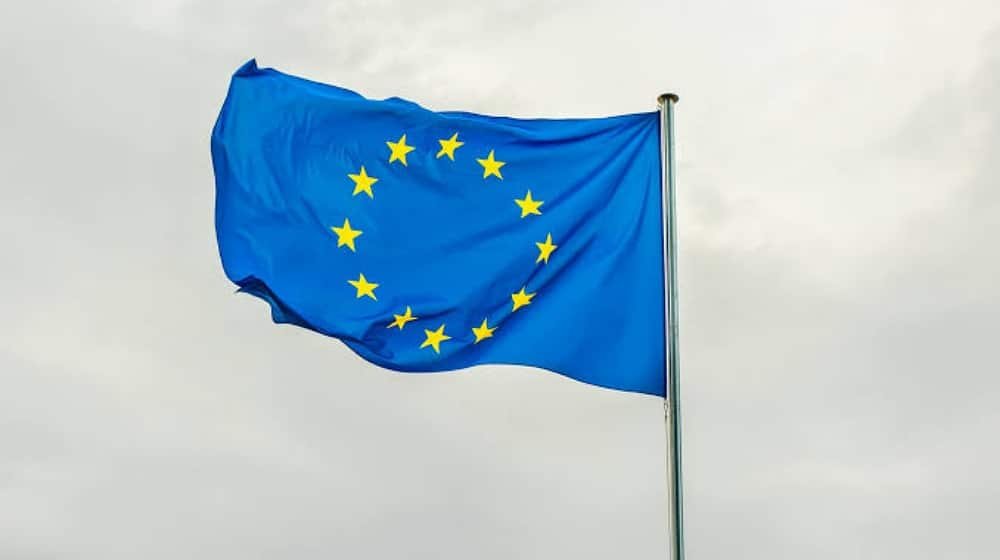
A high-level European Union (EU) monitoring mission comprising officials from the European External Action Service (EEAS) and the European Commission’s Directorates-General for Trade and for Employment, Social Affairs and Inclusion is scheduled to visit Pakistan on November 24, 2025, to review the implementation of the GSP+ scheme.
Sources said the mission will conduct a comprehensive assessment of Pakistan’s progress on the effective implementation of 27 international conventions related to human and labour rights, environmental protection, climate change, and good governance, commitments that underpin Pakistan’s continued eligibility for the Generalized Scheme of Preferences Plus (GSP+) trade status.
Under the GSP+ arrangement, eligible developing countries benefit from wide-ranging tariff preferences aimed at promoting poverty alleviation, sustainable growth, and deeper integration into the global economy.
For Pakistan, this preferential access allows zero duties on 66% of tariff lines when exporting to the EU, providing a significant boost to national industries and employment.
Since obtaining GSP+ status in 2014, Pakistan’s exports to the European Union have consistently increased, rising from $5.1 billion in 2015 to $9.0 billion in 2024.
The EU is Pakistan’s largest trading partner, with key exports including garments, bedlinen, terry towels, hosiery, leather products, sports goods, and surgical instruments, sectors that employ millions across the country.
Sources added that the EU delegation will hold extensive meetings with representatives from the Government of Pakistan, the United Nations Country Team, the International Labour Organization (ILO), the business community, and civil society organizations.
Discussions will focus on Pakistan’s ongoing reforms, progress in labour standards, human rights issues, and environmental and governance measures. The mission’s findings will feed into the next GSP+ report, expected to be presented to the European Parliament and the Council of the European Union in 2026.
Over the past decade, Pakistan has worked with the EU and other international partners to align its laws and policies with global conventions. Reforms in labour inspection, women’s empowerment, climate adaptation, and industrial compliance have been central to these efforts.
However, human rights activists have expressed concerns regarding the protection of civic freedoms and judicial follow-up on human rights cases, which could influence upcoming GSP+ assessments.
The European Union continuously monitors GSP+ countries through reports from the UN and other relevant agencies, complemented by regular on-the-ground missions.
Pakistan has already undergone four review cycles, in 2016, 2018, 2020, and 2022, with constructive engagement noted on both sides.
Recently, Pakistan’s Commerce Minister, during a meeting with members of the EU Development Committee, highlighted that Pakistan has been elected to the United Nations Human Rights Council for the 2026–2028 term, reflecting global confidence in its constructive role in advancing dialogue and multilateral cooperation on human rights.
He further informed that Pakistan has harmonized the legal age of marriage and enacted landmark laws such as the Islamabad Child Marriage Restraint Act 2025. Other important legislative initiatives include the establishment of the Commission for the Protection of Journalists and Media Professionals, the forthcoming National Commission for Minorities, and the Policy on Interfaith Harmony, reflecting the government’s commitment to freedom, tolerance, and social cohesion.
During the meeting, the Commerce Minister also raised two key trade concerns with the EU Parliament delegation, the withdrawal of duty concessions on Pakistan’s ethanol exports under the GSP+ scheme, which has adversely affected rural livelihoods, and the Geographical Indication (GI) registration issue of Basmati rice. He urged the EU to ensure a fair and impartial decision that recognizes Pakistan’s heritage and rightful claim to the globally renowned rice variety.
He emphasized that both issues are critical for Pakistan’s rural economy and the livelihoods of millions of farmers, especially in the wake of recent floods that have impacted the agricultural sector.
About the Author
Written by the expert legal team at Javid Law Associates. Our team specializes in corporate law, tax compliance, and business registration services across Pakistan.
Verified Professional
25+ Years Experience