
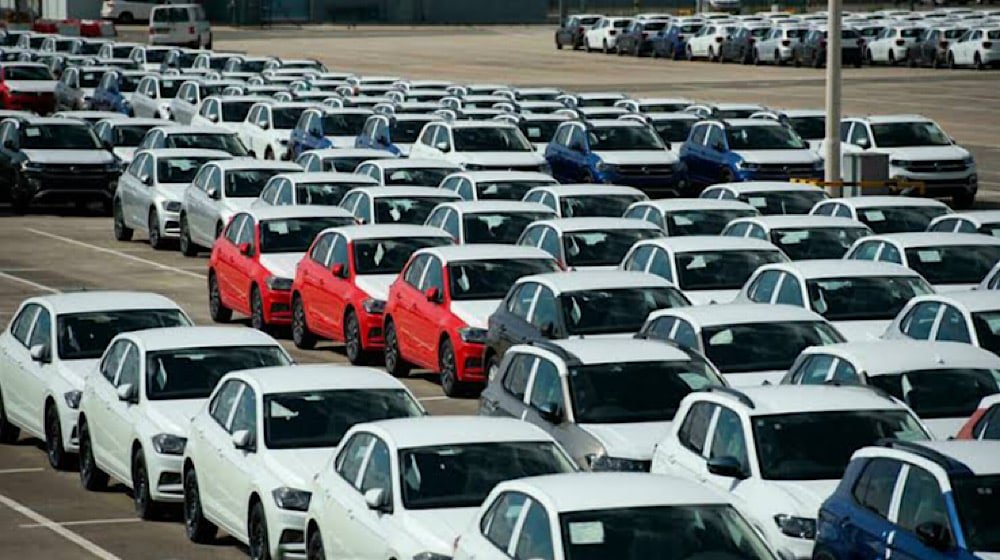
The government is considering abolishing the Personal Baggage Scheme for used car imports and plans to tighten regulations on the two remaining schemes, as part of a broader effort to curb the influx of secondhand vehicles.
According to a report by a national daily, the Ministry of Commerce has submitted a summary to the Economic Coordination Committee (ECC) of the cabinet, recommending the discontinuation of the Personal Baggage Scheme while proposing stricter controls on the Transfer of Residence and Gift Schemes to prevent misuse.
Industry data shows a sharp resurgence in used-vehicle imports since December 2024, a trend that has drawn strong opposition from the domestic auto sector. Local manufacturers argue that Pakistan’s approach stands in stark contrast to regional peers, where used-car imports are tightly restricted: India allows virtually none, Vietnam’s share is just 0.3 percent, and Thailand’s is 1.2 percent.
The sector warns that Pakistan’s more liberal policy, especially after a September 2025 notification allowing imports of vehicles up to five years old, could undermine the country’s automotive value chain. There are concerns that after June 2026, the age limit on imports may be lifted entirely, potentially opening the door to a flood of older vehicles.
Pakistan’s auto industry, which comprises around 1,200 factories, supports 2.5 million jobs, generates an estimated Rs. 500 billion in annual government revenue, and attracts about $5 billion in foreign investment, is urging the government to reconsider.
Between December 2024 and October 2025, Pakistan imported 45,758 vehicles, with nearly 99 percent coming from Japan. Imports from other countries were minimal, including 130 units from Thailand, 55 from the US, and smaller numbers from Jamaica, Germany, Australia, China, and the UAE.
Industry estimates suggest local vendor industries lost about Rs. 50 billion during this period, while the foreign-exchange impact is also significant: local manufacturers require about $10,138 in documented banking-channel imports per vehicle, compared to $14,010 per unit for used-car importers, much of it through informal channels.
As the government drafts a new Auto Policy aimed at strengthening domestic manufacturing, the debate continues over whether localization efforts can succeed alongside a liberal used-car import regime.
The data suggests Pakistan is an outlier among manufacturing economies, both in its policy direction and market outcomes. The ECC is expected to make a final decision on the proposed changes in the coming weeks.
Editorial & Legal Practice Group
Authored and reviewed by the corporate law and tax litigation practice group at Javid Law Associates. Our team comprises High Court advocates, corporate legal advisors, and authorized tax practitioners across Pakistan.
Advocates High Court & Tax Counsel
Jurisdiction: Pakistan