
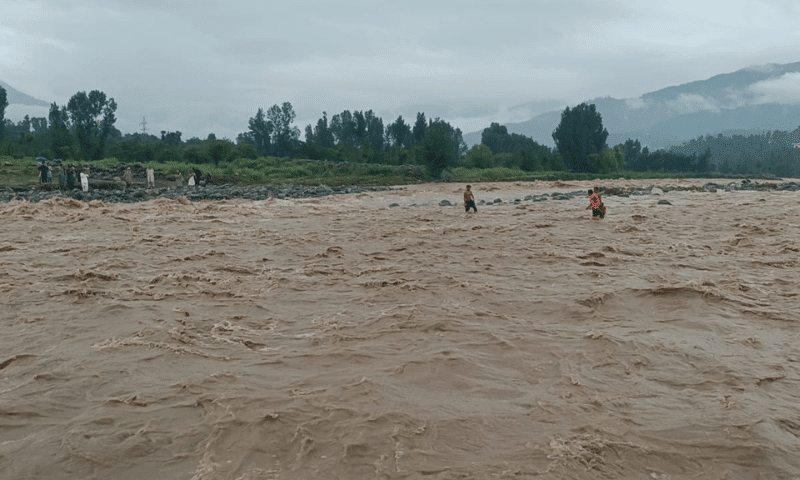
As the current monsoon season claims around 500 lives, half of them children, it is becoming increasingly evident that this tragedy cannot be attributed solely to climate change or natural disasters. Instead, it highlights repeated policy failures, mismanagement, and bureaucratic inefficiencies that have plagued Pakistan’s public service institutions, particularly the Pakistan Meteorological Department (PMD).
Despite multiple wake-up calls and a rare opportunity to modernize its hydromet infrastructure with $188 million in financing from the World Bank, Pakistan squandered the chance to build a robust early warning system. The consequences of this failure are now being felt across the country.
Efforts to upgrade the PMD began in 2016 after a sudden windstorm in Islamabad and Rawalpindi caused widespread damage and loss of life, a storm the PMD failed to predict. Then Prime Minister Nawaz Sharif directed an overhaul of the department’s outdated technology. In response, the Government of Pakistan sought technical assistance from the World Bank, which led to the development of a comprehensive Hydromet Modernization Roadmap by international experts.
By 2017, a full project plan was prepared under the leadership of then Secretary Aviation, Irfan Elahi. The plan allocated $106 million to the PMD and $82 million to the National Disaster Management Authority (NDMA) to establish a National Disaster Response Force. Pakistan was poised to join regional neighbors like Bangladesh and Nepal in advancing its weather forecasting systems.
However, the project soon encountered internal resistance. Then Director General of PMD, Ghulam Rasul, allegedly opposed the World Bank-financed project, advocating instead for it to be taken up under the China-Pakistan Economic Corridor (CPEC). According to sources, his preference was motivated by personal ties and alleged promises from a Chinese company. He reportedly pressured the Aviation Ministry and the Economic Affairs Division (EAD) to delay World Bank negotiations, causing a year-long delay.
When the CPEC route failed to materialize, the World Bank resumed talks with the EAD and approved the financing in May 2018. However, Ghulam Rasul allegedly ensured that the project’s PC-1 (Planning Commission Form 1) was never approved by the Central Development Working Party (CDWP). His successor, Muhammad Riaz Khan, continued to delay the revised PC-1, despite initial support.
Meanwhile, the NDMA component also fell apart due to poor advocacy and a lack of serious representation at the CDWP. Key NDMA officials failed to attend critical meetings, and no substantial effort was made to lobby for project approval. As a result, the $188 million in approved financing remained unused.
While Bangladesh and Nepal successfully implemented similar World Bank-funded hydromet projects, Pakistan continued to pay commitment charges on idle funds. As exchange rates fluctuated, the loan’s value diminished from $188 million to $168 million.
In 2020, then Climate Change Minister Malik Amin Aslam requested World Bank support for his ecosystem restoration initiative. The bank advised using the unutilized $188 million. The project was restructured, with $128 million allocated to green job creation and $60 million for hydromet modernization under the National Disaster Risk Management Fund (NDRMF).
Although initial approvals were fast-tracked, the project lost momentum due to leadership instability and mismanagement at NDRMF. The project was later politicized, with a focus on PTI strongholds like Khyber Pakhtunkhwa, while Sindh and Punjab were sidelined.
Leadership at PMD and NDRMF continued to falter. Even as catastrophic floods struck in 2022, the hydromet modernization component remained stalled. Eventually, the World Bank repurposed $150 million of the loan for cash compensation to flood victims via the Benazir Income Support Programme (BISP).
Another attempt was made to salvage the hydromet component through the IFRAP (Flood Reconstruction Project) under the Ministry of Planning, with one portion dedicated to PMD upgrades. While the project briefly gained momentum under Secretary Aviation Saif Anjum, it stalled again after his transfer. Three years after approval, only one major tender for automatic weather stations has moved forward, and radar procurement has yet to begin.
While Pakistan dragged its feet, Bangladesh and Nepal successfully implemented similar programs funded by grants, not loans, and are now reaping the benefits of improved climate resilience and early warning systems.
The NDMA has publicly expressed grievances with the PMD and has partnered with a private company, Weatherwalay, to generate its own forecasts. These efforts are expected to be bolstered by the recent launch of Pakistan’s weather satellite. However, it remains to be seen whether the Prime Minister will hold anyone accountable for the failure to utilize these funds and for prioritizing personal interests over national needs.
Former DG PMD Ghulam Rasul, when contacted, stated that he had always supported strengthening hydromet services but preferred grant-based financing over loans, arguing that Pakistan deserved the same treatment as its regional neighbors. He also claimed to have pursued Japanese grants and cited the installation of radars in Islamabad and Karachi as outcomes of his efforts.
A senior Planning Commission official, speaking on condition of anonymity, admitted delays in the project but clarified that these were not due to their department. “We have submitted the bidding documents to the World Bank for vetting and are currently awaiting their response,” the official said. They added that since this is an international tender, the documents must meet specific standards to ensure strong competition. “We are optimistic that the tender for the procurement of radars will be opened within the next two months,” the official concluded.
An official from the Pakistan Meteorological Department (PMD) told ProPakistani that,
About the Author
Written by the expert legal team at Javid Law Associates. Our team specializes in corporate law, tax compliance, and business registration services across Pakistan.
Verified Professional
25+ Years Experience