
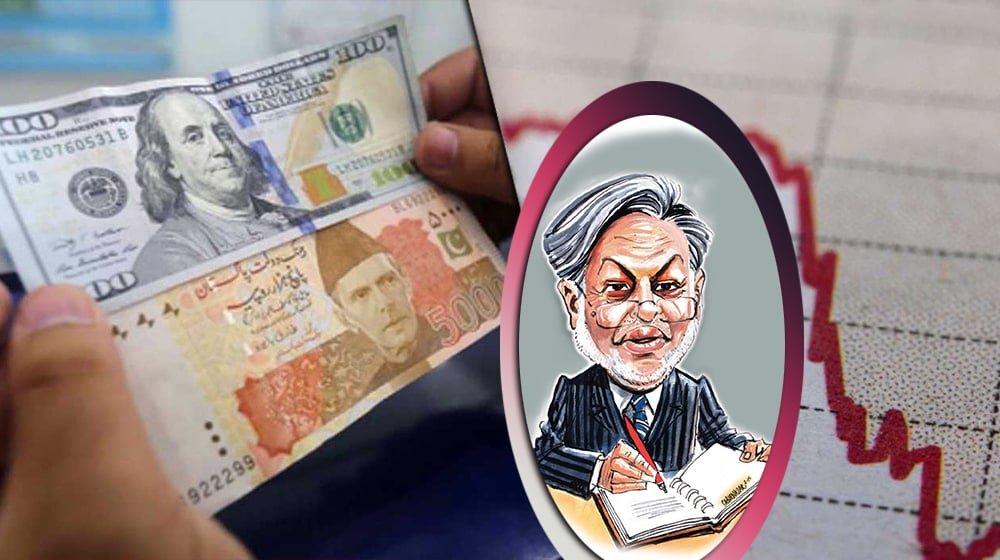
Deputy Prime Minister Ishaq Dar has stated that the country would not have faced financial difficulties in the past five years if his economic advice had been followed in 2017.
Speaking to overseas Pakistanis in New York, he said that in 2017, Pakistan was the 24th largest economy in the world but later slid to the brink of bankruptcy.
He said the government managed to prevent Pakistan from defaulting. During this time, inflation had decreased, interest rates had been reduced, and economic stability was returning. He compared the economic situation before the 2013 elections, saying that Pakistan was considered unstable at the time but later rebounded under his tenure.
Dar recalled that in 2013-2017, inflation dropped to 3.6 percent, interest rates to 5 percent, and power shortages had been eliminated. He also said that large-scale investments were made to combat terrorism, which improved security conditions. He also acknowledged that Pakistan had completed an International Monetary Fund (IMF) program during this period.
Dar said that in 2017, global financial institutions were praising Pakistan’s economic progress and projected that the country could enter the G20 by 2030. However, he claimed that after a change of government in 2018, Pakistan’s economy weakened and fell to the 47th position globally.
Regarding the tenure of the Pakistan Democratic Movement (PDM) coalition from 2022 onward, Dar argued that economic stability was prioritized over political interests.
He reaffirmed the government’s commitment to facilitating overseas Pakistanis and lauded them for their role in driving up remittances, exports, and investment.
Editorial & Legal Practice Group
Authored and reviewed by the corporate law and tax litigation practice group at Javid Law Associates. Our team comprises High Court advocates, corporate legal advisors, and authorized tax practitioners across Pakistan.
Advocates High Court & Tax Counsel
Jurisdiction: Pakistan