
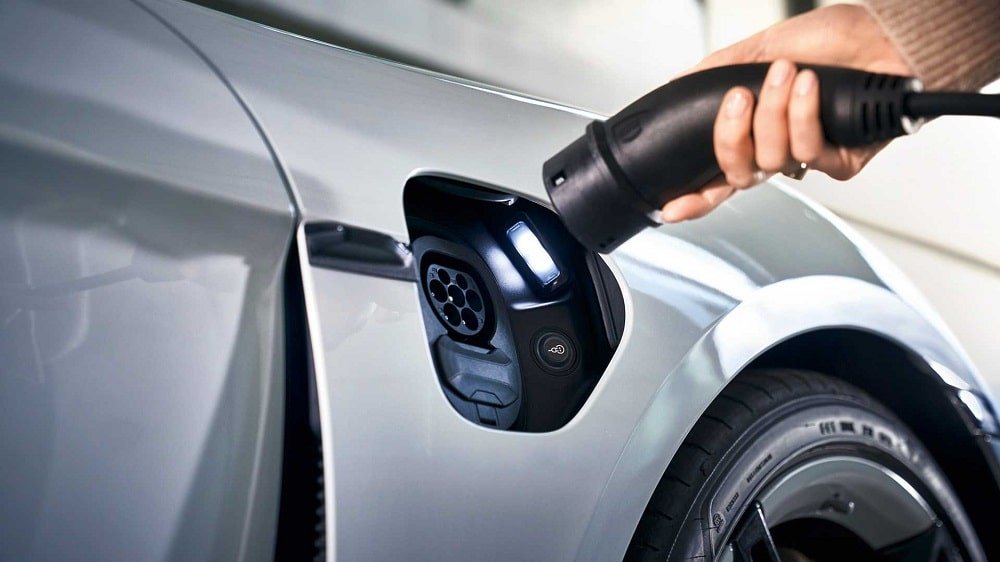
Prime Minister Shehbaz Sharif on Tuesday launched Pakistan’s first-ever National Electric Vehicle Policy, the New Energy Vehicle (NEV) Policy 2025–30, calling it a crucial step in the country’s fight against climate change and a milestone in the government’s green transformation agenda.
Unveiling the policy at a ceremony in Islamabad, the premier said Pakistan, despite contributing less than 1% to global greenhouse gas emissions, remained among the ten most climate-vulnerable nations. He warned that the country could not bear the financial burden of climate recovery on its own and urged the international community to extend greater support to climate-stressed nations.
“Our carbon footprint is negligible, but the cost we are paying in lives, livelihoods and infrastructure is catastrophic,” Sharif said, referencing the 2022 floods that killed nearly 1,700 people and inflicted damages exceeding USD $30 billion, as well as this year’s monsoon devastation that has claimed more than 700 lives.
The NEV Policy 2025-30 includes subsidies for electric motorcycles, aimed at making electric mobility accessible to the masses. The government also announced the distribution of 100,000 laptops to high-performing students, with a 10% quota reserved for students from Balochistan to promote inclusion.
PM described the transition as both a climate necessity and an economic opportunity, reducing dependence on costly fossil fuel imports and aligning Pakistan with global green growth.
The prime minister reiterated that Pakistan’s capacity to recover from climate shocks was overstretched.
“We are no longer in a position to absorb more loans. The international community must step up to help climate-vulnerable nations like Pakistan,” he said.
He thanked the UK government and international partners for their support in shaping the policy and lauded the Ministry of Industries for “driving innovation toward a sustainable future.”
Special Assistant to the Prime Minister on Industries and Production, Haroon Akhtar Khan, said the electric vehicle transition could generate thousands of new jobs, cut petroleum consumption, and put Pakistan at the forefront of a “green industrial revolution.” “This green revolution is the future of Pakistan,” Khan remarked.
Federal Minister for National Food Security, Rana Tanveer Hussain, hailed the initiative as a “historic moment,” saying the framework was designed in line with international environmental standards.
The government is expected to propose an increase in the current Rs9 billion education support budget in the coming fiscal year, with part of the funds earmarked to support skill-building for a green economy.
About the Author
Written by the expert legal team at Javid Law Associates. Our team specializes in corporate law, tax compliance, and business registration services across Pakistan.
Verified Professional
25+ Years Experience