
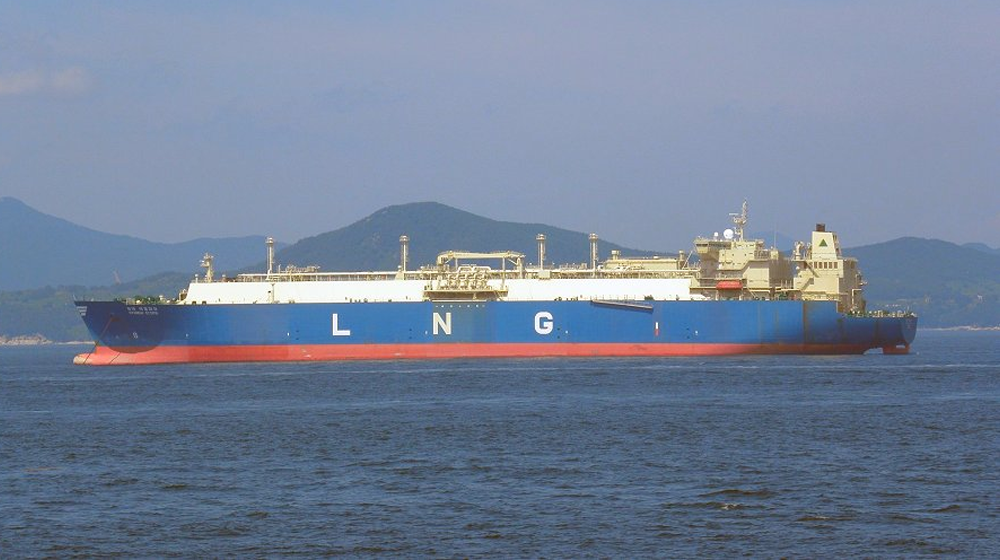
Pakistan and Qatar have agreed to divert 24 liquefied natural gas (LNG) cargoes next year as domestic demand continues to weaken, particularly from the power sector.
The arrangement is based on a net proceeds differential formula, under which Pakistan will bear the loss if Qatar sells the diverted cargoes in the open market below the contracted price, according to a report submitted to the Economic Coordination Committee (ECC).
Policy guidelines will now be issued to the Oil and Gas Regulatory Authority (Ogra) so that the price impact can be passed on to LNG consumers.
Officials said Pakistan State Oil (PSO) confirmed that Qatar Energy has shown willingness to apply the net proceeds mechanism for 2026.
The agreement comes amid what officials describe as “demand destruction” in the gas sector, as power producers consume less RLNG due to lower electricity generation.
As a result, Sui Northern Gas Pipelines Limited (SNGPL) has been facing surplus LNG volumes in the system. Last year, Pakistan worked with Eni to sell 11 cargoes in the open market and deferred five Qatar shipments to ease the pipeline pressure.
Documents show that earlier estimates suggested a surplus of about 177 cargoes between July 2025 and December 2031 – roughly 24 per year.
In August, the Petroleum Division sought ECC’s approval to negotiate adjustments with Qatar, presenting four options, including reducing supply temporarily, extending the contract period, and invoking the net proceeds clause.
A government delegation, including the petroleum minister and senior officials from PSO and SNGPL, held talks in Doha in late August 2025.
It was agreed that the net proceeds option would first be tested for 2026, and further steps would follow depending on outcomes. Discussions are expected to close by November 15.
In parallel, the same pricing mechanism will also apply to 21 cargoes from Eni (11 in 2026 and 10 in 2027) based on projected demand and supply conditions.
Diverting 2 cargoes from QatarEnergy, plus one cargo from Eni could save Pakistan up to $100 million per month in foreign exchange and reduce system congestion, allowing local exploration companies to increase domestic gas output.
Lower LNG imports are also expected to slow the accumulation of circular debt linked to PSO’s fuel supply chain.
Editorial & Legal Practice Group
Authored and reviewed by the corporate law and tax litigation practice group at Javid Law Associates. Our team comprises High Court advocates, corporate legal advisors, and authorized tax practitioners across Pakistan.
Advocates High Court & Tax Counsel
Jurisdiction: Pakistan