
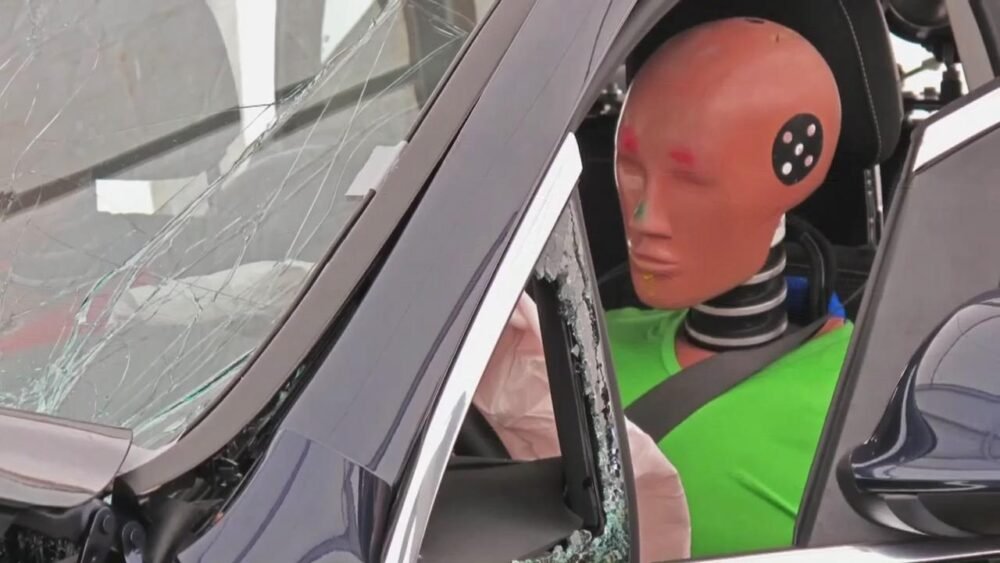
A major rift has arisen between Pakistan’s standards authority and industry promoters over who should set and enforce vehicle safety rules.
The proposed Motor Vehicles Industry Development Act, 2025, gives the Engineering Development Board (EDB) the power to establish minimum safety, quality, environmental, and performance standards for vehicles.
Critics argue that this responsibility should firmly rest with PSQCA, the national standards authority.
Traditionally, PSQCA, which operates under the Ministry of Science and Technology, has developed, announced, and enforced technical regulations for all industrial and consumer products, including motor vehicles. It has the legal authority to assess compliance for vehicles, components, and systems.
However, under the draft Act, the EDB will take over that authority. Observers warn that this represents regulatory overreach because the EDB primarily promotes industry and lacks testing labs or regulatory experience.
PSQCA has recently made progress in vehicle regulation by formalizing type approval procedures and signing agreements with international standard organizations to align Pakistani rules with global standards.
Yet, it does not have full testing facilities within the country. In contrast, the EDB has no history of enforcement. Legal experts cautioned that giving regulatory powers to the EDB could lead to duplication, conflicts of interest, and legal issues, especially since PSQCA still has recognition within the WTO and ISO frameworks.
Officials in the Ministry of Science and Technology say they plan to formally oppose the sections of the draft law that marginalize PSQCA.
They argue that standardization and compliance assessment are PSQCA’s legal responsibilities and cannot simply be shifted to the EDB without appropriate changes to existing laws.
In September 2025, the federal government announced 57 vehicle safety standards, requiring compliance with WP-29 (UNECE) norms as part of its IMF obligations.
The new standards ban imports of accident-grade “Type D” vehicles and require local manufacturers and importers to be licensed under the EDB, among other responsibilities.
The federal cabinet has approved the first legally binding auto safety law. This law includes penalties of up to three years in prison and fines of up to Rs. 10 million for non-compliance. This shows how serious the shift is.
The Pakistan Automotive Manufacturers Association (PAMA) has strong objections. Its members argue that the draft law was created without enough consultation from the industry. They also criticize the criminalization of manufacturing and trading under the new rules.
Amid this regulatory fiasco, Pakistan has signed an agreement with the International Finance Corporation (IFC). This agreement will support reforms in policy, regulation, and standards, especially to promote electric vehicles.
This is seen as part of a larger effort to modernize mobility and align Pakistan’s standards with global norms.
Editorial & Legal Practice Group
Authored and reviewed by the corporate law and tax litigation practice group at Javid Law Associates. Our team comprises High Court advocates, corporate legal advisors, and authorized tax practitioners across Pakistan.
Advocates High Court & Tax Counsel
Jurisdiction: Pakistan