
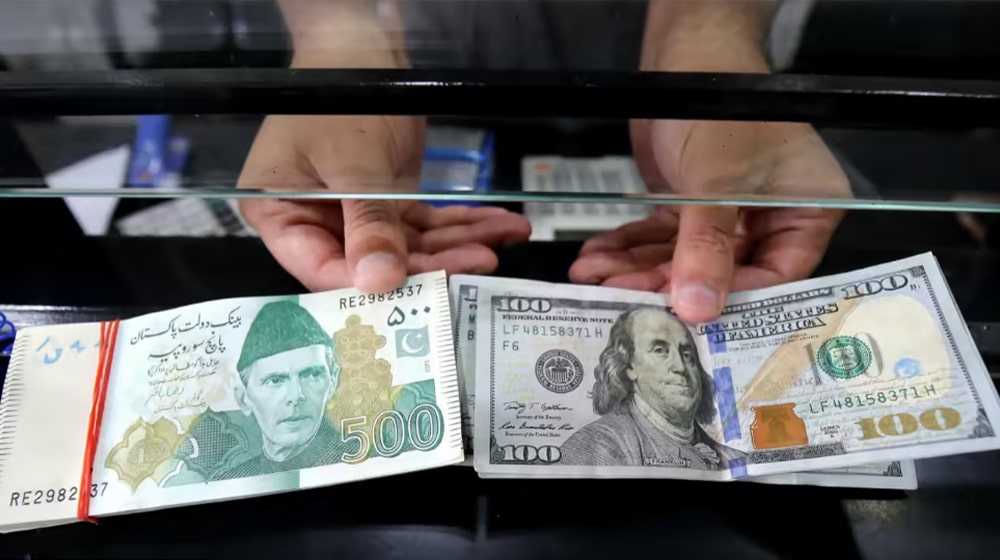
Pakistan’s latest exchange-rate and REER data show no justification for another rupee devaluation, ex-minister Dr. Gohar Ejaz wrote on X.
He said Pakistan’s Real Effective Exchange Rate (REER) has risen above 100 without weakening export performance, which means PKR is “overvalued”.
From FY22 to FY24, Pakistan saw a massive 59.3 percent devaluation from Rs. 177 to Rs. 282 per dollar, one of the steepest in the region. Yet exports fell 9.2 percent in FY23, even though Pakistan’s REER dropped to 92.2. The data shows the rupee’s collapse did not translate into export gains.
As REER gradually increased again from 98.5 in FY24 to 100.9 in FY25, exports rebounded sharply, growing 8.6 percent and 5.6 percent, reaching $40.51 billion. Analysts say this completely contradicts the argument that devaluation boosts exports.
Data said Pakistan’s export weakness stems from structural problems, not currency valuation. High electricity tariffs of 12–14 cents/kWh, interest rates averaging 11 percent, and a heavily import-dependent industrial structure wipe out any theoretical gain from depreciation. During FY23’s devaluation spell, electricity costs spiked to 15 cents/kWh, neutralising competitiveness benefits.
International comparisons reinforce this point. Turkey’s REER recently dropped to 66, yet the lira continued falling because markets respond to credibility, not REER metrics. China maintains a REER of 135 while operating the world’s largest export machinery. Egypt’s deep devaluation, meanwhile, produced contraction rather than export growth.
Pakistan’s REER for FY26 stands at 104 as of October 31, only slightly above the benchmark. With the exchange rate stable at 278–282, backed by rising reserves and record remittances, experts warn that further devaluation would ignite inflation, encourage panic imports, and deliver zero competitiveness gains.
Gohar Ejaz argued that Pakistan needs stability, not depreciation. “The average REER for FY25 stands at 100, indicating there is no need for further devaluation,” he wrote. “Devaluation disproportionately harms 92 percent of our economy, while nearly half of our population lives below the poverty line. Those advocating devaluation represent vested interest groups seeking marginal, short-term gains at the expense of the people.”
Editorial & Legal Practice Group
Authored and reviewed by the corporate law and tax litigation practice group at Javid Law Associates. Our team comprises High Court advocates, corporate legal advisors, and authorized tax practitioners across Pakistan.
Advocates High Court & Tax Counsel
Jurisdiction: Pakistan