
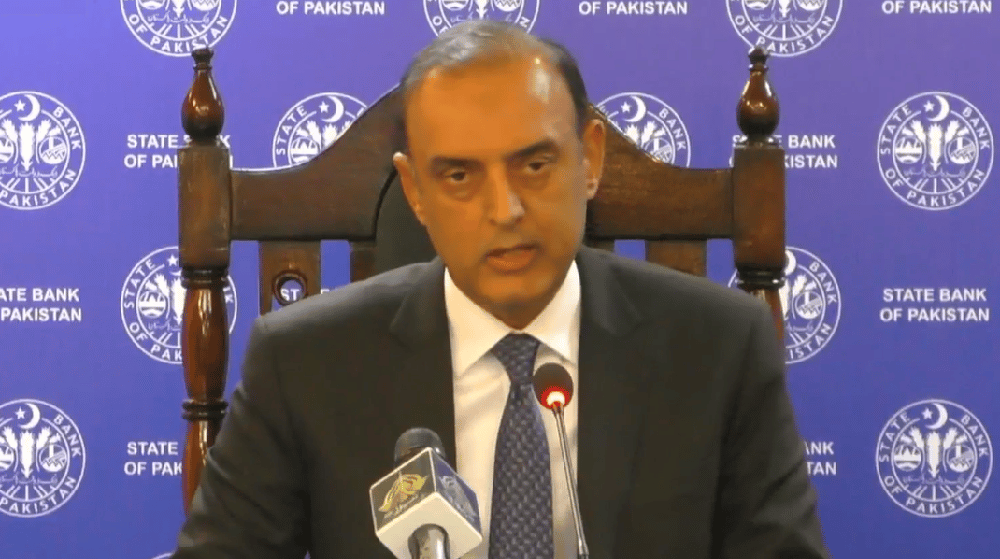
Governor State Bank of Pakistan (SBP), Jameel Ahmad, has projected Pakistan’s economic growth to range between 3.25% and 4.25% in FY2026, citing significant progress in macroeconomic stability.
Speaking at the annual meeting of the Pakistan Textile Council (PTC) in Karachi, Ahmad highlighted key achievements, including record-low inflation, improved foreign exchange reserves, and a narrowing current account deficit.
The governor noted that Pakistan has successfully navigated unprecedented economic challenges since 2022. Foreign exchange reserves, which had plunged to $2.8 billion in early 2023, have now surged to $14.3 billion. Meanwhile, remittances reached over $38 billion in FY2025, with a significant shift from informal to formal channels.
Inflation, which had been a major concern, dropped to a historic low of 3.2% by June 2025, enabling the SBP to slash the policy rate from 22% to 11% over the past year. Ahmad attributed this turnaround to fiscal consolidation, reforms in exchange companies, and stable external debt levels, which have collectively bolstered market confidence.
“Pakistan’s economy is now positioned on a more stable footing, with growth projected between 3.25% and 4.25% in FY2026. Our commitment is to maintain stability, build reserves, and ensure inflation remains within the 5-7% target range,” Ahmad stated.
While the SBP’s achievements were lauded, the Pakistan Textile Council (PTC) raised concerns over structural barriers that continue to hinder export competitiveness. PTC Chairman Fawad Anwar warned that recent amendments by the Federal Board of Revenue (FBR) could cripple Pakistan’s textile exports, which are vital to the country’s economic recovery.
“Despite macroeconomic stabilization, the cost of doing business in Pakistan remains uncompetitive. The exclusion of essential raw materials from the Export Facilitation Scheme (EFS) has placed an undue burden on exporters at a time when global markets present a once-in-a-decade opportunity for Pakistan to capture market share,” Anwar said.
He called for the immediate withdrawal of import duties on essential raw materials excluded from the EFS, along with a cap on sales tax at 3-5%, which should be fully refundable. Anwar also proposed a uniform 1% duty drawback scheme to support all exporters and subsidized financing facilities to offset rising wage and energy costs.
“Textiles and apparel are the backbone of Pakistan’s economy. This is the time for bold policy support so our industry can capture long-term global market share rather than lose ground to competitors,” he emphasized.
The meeting concluded with a consensus that textile exports must remain central to Pakistan’s economic recovery strategy. Both the SBP and PTC agreed to continue policy dialogue, particularly on financing schemes for renewable energy and concessional export credit, to ensure Pakistan’s exporters remain competitive in global markets.
About the Author
Written by the expert legal team at Javid Law Associates. Our team specializes in corporate law, tax compliance, and business registration services across Pakistan.
Verified Professional
25+ Years Experience