
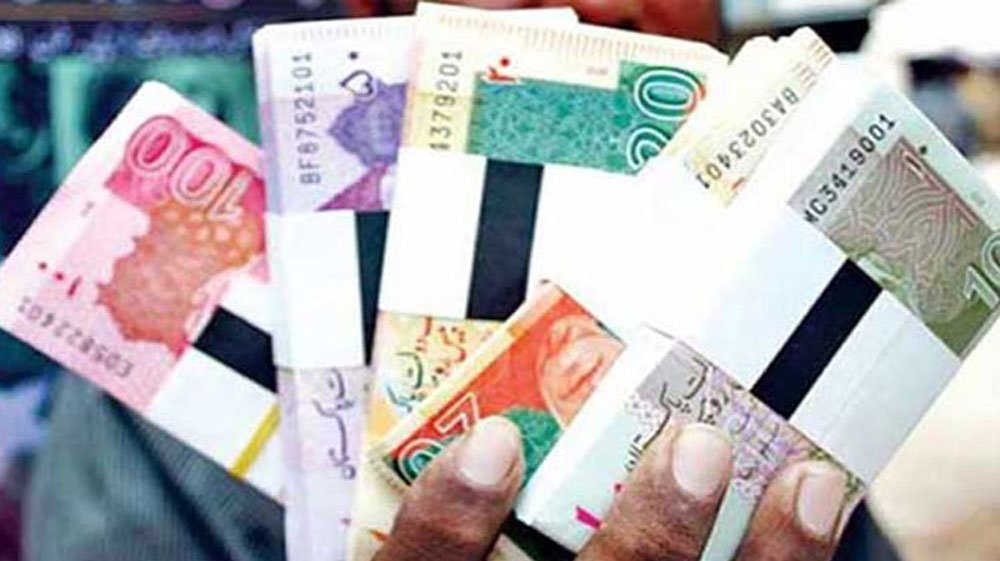
Citizens across Pakistan are once again facing disappointment as fresh currency notes, traditionally issued by banks for the festive season, remain unavailable to the public throughout the year.
Despite repeated denials from commercial banks and State Bank of Pakistan (SBP) field offices, evidence obtained by ProPakistani suggests that fresh notes are being diverted into the black market through an organized corruption network within SBP and its subsidiary SBP-BSC.
In past years, SBP had introduced a CNIC-based quota system that allowed citizens to book fresh notes through SMS and collect them from designated bank branches. However, that facility has quietly been discontinued. Now, ordinary citizens are told that banks have no stock of fresh notes, while brokers in markets across Lahore, Karachi, Islamabad, and other cities openly sell them at hefty premiums.
For example, a bundle of Rs. 10 notes, officially worth Rs. 10,000, is being sold in the black market for Rs. 16,000, creating an artificial scarcity that burdens the public while filling private pockets.
Leaked internal emails and handwritten cash issuance slips reviewed by ProPakistani reveal that senior SBP officials, including an Executive Director, are allegedly complicit in issuing bulk fresh notes directly to brokers. One such broker, identified as M. Usman, runs a prize bond and cash shop in Lahore and is a regular recipient of these notes.
The documents show specific bundles of Rs. 10 and Rs. 20 notes, worth hundreds of thousands, being issued under the guise of “fresh cash for Muzaffarabad” but ultimately ending up in private hands. Handwritten notations on the memos even record serial numbers of currency packets, proof that these notes never made it to public counters.
According to banking insiders, each such transaction generates at least Rs. 2 million in illegal profit for the officials involved. The notes are issued to brokers at face value and resold at premiums many times higher in the open market. These kickbacks are allegedly distributed among staff at different levels, creating a well-oiled system of corruption.
Sources inside SBP confirm that an anonymous complaint, complete with documentary evidence, has already been forwarded to the Governor of SBP. Yet, no meaningful restrictions or investigations have been initiated, raising questions about the seriousness of SBP’s internal accountability mechanisms.
For ordinary Pakistanis, this practice not only inflates the cost of acquiring fresh notes for Eid traditions but also undermines public trust in the central bank. The fresh notes scheme, once considered a small but meaningful public service, has effectively been hijacked by insiders for personal gain.
The State Bank of Pakistan must answer how fresh notes, meant for citizens, continue to disappear from official counters only to resurface in the black market at exorbitant rates. Without decisive action, this corruption risks further damaging the credibility of Pakistan’s banking regulator.
ProPakistani reached out to the State Bank of Pakistan (SBP) for comments on the matter. The regulator did not respond to requests for comment.
Editorial & Legal Practice Group
Authored and reviewed by the corporate law and tax litigation practice group at Javid Law Associates. Our team comprises High Court advocates, corporate legal advisors, and authorized tax practitioners across Pakistan.
Advocates High Court & Tax Counsel
Jurisdiction: Pakistan