
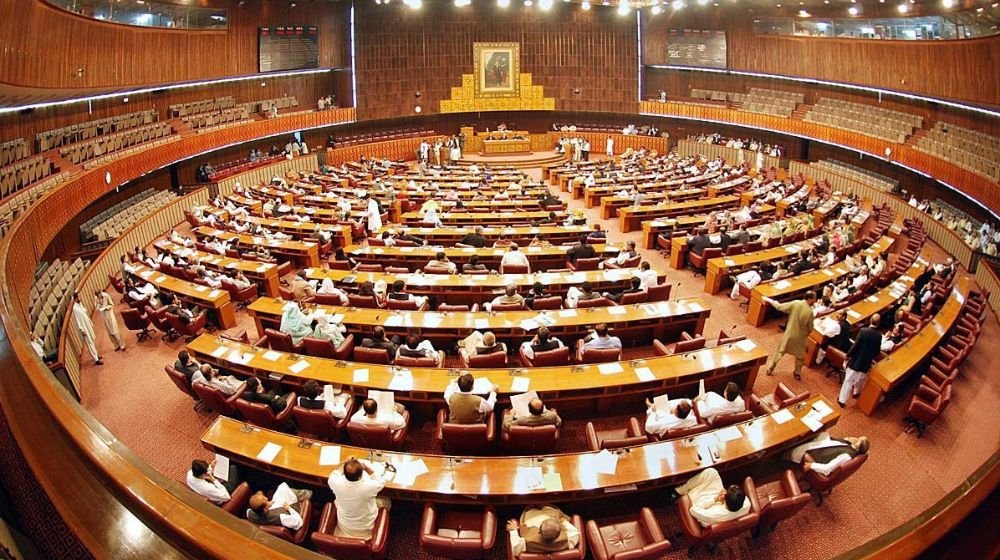
The Senate Standing Committee on Finance and Revenue directed the government to move legal amendments aimed at revoking the authority of regulatory bodies to raise salaries and perks through their own policy boards.
Chaired by Senator Saleem Mandviwalla at Parliament House, the committee recommended that the Finance Division amend laws governing all regulatory bodies, including the State Bank of Pakistan (SBP), the Securities and Exchange Commission of Pakistan (SECP), and the Pakistan Medical and Dental Council (PMDC), to restrict such powers exclusively to the federal government with parliament’s approval.
The panel emphasized that no exceptions should be allowed among the 18 regulators, noting that state-owned enterprises (SOEs) operate under similar rules without independent powers to revise pay.
The directive followed an audit report by the Auditor General of Pakistan, which highlighted the SECP’s allocation of Rs 267 million for staff salaries. Members voiced concern that unchecked autonomy was allowing regulatory institutions to grant salary increases without oversight. At present, only the SECP, SBP, and PMDC have the legal mandate to do so.
The SECP chairman defended the commission’s position, arguing that its governing law grants it administrative, financial, and functional independence, which the federal government is required to safeguard. During the discussion, Senator Farooq Naek questioned whether the judiciary, including the Supreme Court and high courts, could also raise their own salaries. The law secretary clarified that the president determines judicial pay on the advice of the prime minister.
Separately, the committee was briefed by the Competition Commission of Pakistan (CCP) on its enforcement record. CCP Chairman Kabir Ahmed Sidhu informed the panel that over 200 cartel and market dominance cases remain pending before the Supreme Court, involving critical sectors such as cement, sugar, and energy. However, he noted that active follow-up had reduced the backlog from 567 to 280 cases within a year, resulting in the recovery of Rs. 449 million in fines.
According to the briefing, the CCP inherited the backlog due to a lack of quorum between March 2022 and early 2023. Since restructuring, the commission has concluded 224 cases across different courts, 121 before the Competition Appellate Tribunal (CAT), 40 before the Sindh High Court, 39 before the Lahore High Court, 13 before the Islamabad High Court, and 11 before the Supreme Court.
It also completed 20 cartelisation and abuse-of-dominance inquiries and 18 deceptive marketing investigations, issuing 14 enforcement orders that imposed penalties of more than Rs1 billion during the year.
Editorial & Legal Practice Group
Authored and reviewed by the corporate law and tax litigation practice group at Javid Law Associates. Our team comprises High Court advocates, corporate legal advisors, and authorized tax practitioners across Pakistan.
Advocates High Court & Tax Counsel
Jurisdiction: Pakistan