
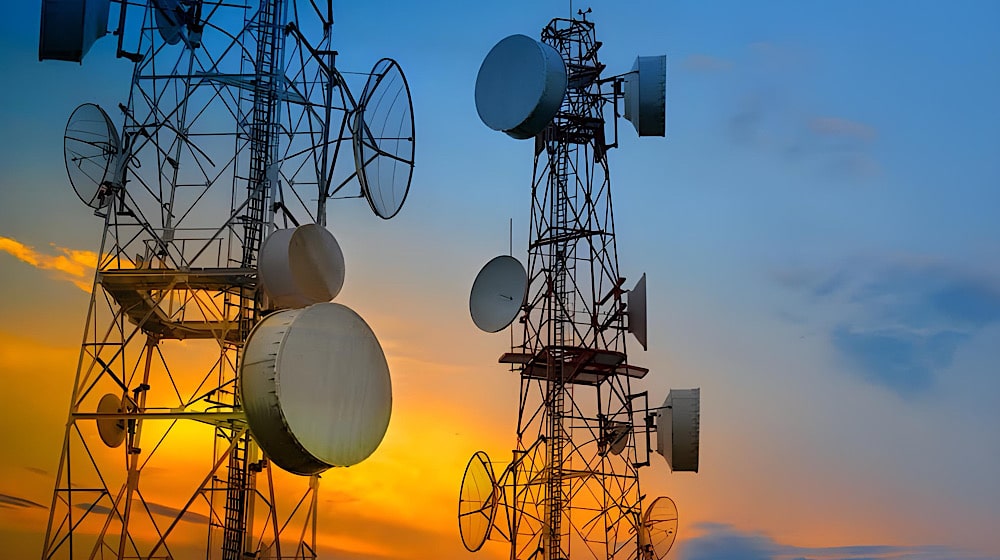
According to the IT Ministry report, telecom sector revenues saw a substantial increase, rising by Rs. 138 billion from Rs. 817 billion to Rs. 955 billion over the past year.
The Ministry of IT and Telecom, under the leadership of Minister of State for IT and Telecom, Shaza Fatima Khawja, also reported a significant rise in broadband subscribers, growing from 127.6 million to 142.3 million. Smartphone penetration improved as active smartphones on the network increased from 59% to 64%.
Local mobile manufacturing witnessed a boost, with production rising from 21.28 million to 31.38 million devices. The telecom sector’s contribution to the national exchequer remained at Rs. 341 billion, while fiber connectivity for cell sites grew by 12%, adding 8,200 new sites.
Pakistan’s internet connectivity infrastructure experienced major improvements, including the launch of high-speed submarine cables such as the 2Africa cable with a capacity of 180Tbps, the Africa-1 cable with 96Tbps, and the PEACE cable with 96Tbps. Additionally, internet connectivity was expanded to 813 Mauzas, benefiting approximately 974,363 people, and laying 2,000 kilometers of optical fiber cable (OFC). The country’s IT exports also showed remarkable growth, with a 27% year-on-year increase in the first seven months of FY 2025. Export earnings rose from USD 1,721 million in February 2024 to USD 2,177 million in February 2025.
Global recognition for Pakistan’s IT sector has also strengthened. The country achieved Tier 1 ranking for role-modeling in the 2024 Global Cybersecurity Index by the ITU and improved its UN E-Government Development Index ranking by 14 positions, moving from 150th in 2022. Pakistan was also recognized as a “Tech destiNATION” at Gitex Global 2024.
The ITU ICT Development Index showed a 14% overall rise, with mobile phone ownership increasing by 29% and household internet access improving by 20%. Pakistani companies won several prestigious awards, including over 10 APICTA awards, the Asia-Pacific Meta Llama AI Awards, and first place in the LEAP 25 startup competition.
Efforts to transform Islamabad into a smart city also gained momentum. The MyIslamabad App was soft-launched, providing access to 140+ digital services. The second Smart Village was launched in Sambrial, and 42 divisions along with 176 departments transitioned to e-Office, achieving a 98% adoption rate. The IT Ministry further supported various government sectors by launching digital portals such as the Prime Minister’s Youth Program (PMYP), Hajj App, National Food Security, Apostille, OGRA, HRMIS, and e-Office to enhance accessibility and efficiency.
Several landmark policies and regulations were completed, including the Digital Nation Pakistan Act 2025, National Space Policy, Cloud First Policy, and the establishment of the Telecommunication Appellate Tribunal Act 2024. Special Foreign Currency (FCY) accounts and an e-visa system were introduced, alongside regulations for telecom equipment standards and the harmonization of Right of Way (ROW) rates.
Additionally, Pakistan became the first country to join the Digital Foreign Direct Investment (DFDI) Initiative under the World Economic Forum and Digital Cooperation Organisation. Looking ahead, the IT Ministry is working on key initiatives such as the National Fiberisation Policy, Personal Data Protection Bill, National Semiconductor Policy, National AI Policy, and the National Freelancer’s Facilitation Policy, further positioning Pakistan as a leader in the digital economy.
About the Author
Written by the expert legal team at Javid Law Associates. Our team specializes in corporate law, tax compliance, and business registration services across Pakistan.
Verified Professional
25+ Years Experience