
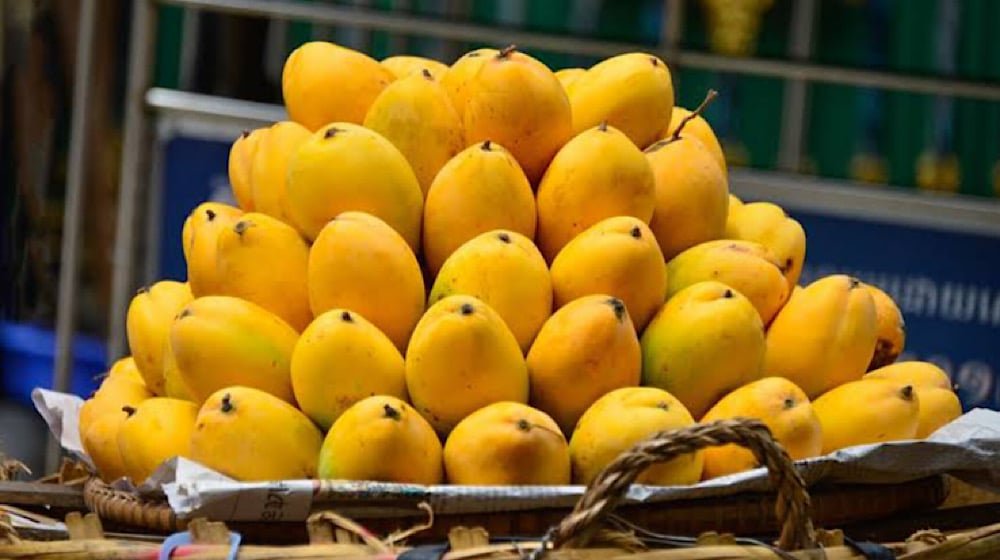
Pakistan’s mango exports are facing renewed scrutiny following serious allegations of non-compliance with international phytosanitary protocols, raising the risk of trade disruptions with key markets such as Iran, the European Union, and Australia.
According to multiple complaints lodged with the Prime Minister’s Office and key ministries—including the Ministry of National Food Security and Research and the Ministry of Commerce—several Hot Water Treatment (HWT) plants have allegedly been violating mandatory treatment standards. Inspectors from the Department of Plant Protection (DPP) are accused of issuing phytosanitary certificates based on falsified entries, enabling the export of untreated or improperly treated mangoes.
In a formal complaint to the Prime Minister, Barrister Junaid Khan alleged that a group of HWT operators—reportedly linked to a politically connected clearing agent at the Taftan–Mirjaveh border with Iran—is manipulating compliance procedures.
These plants are said to be operating with substandard infrastructure, including non-food-grade equipment and inadequate water circulation, compromising pest disinfestation—a critical requirement under export agreements.
The complaint also cites manual tampering of treatment records and doctored compliance logs to secure phytosanitary certificates. These documents, insiders claim, are being used to clear mango shipments through customs with alleged cooperation from contacts within Iran’s agricultural and plant protection authorities.
Oversight of phytosanitary compliance now rests with the National Agri Trade and Food Safety Authority (NA&FSA), which replaced the DPP in this role. NA&FSA protocols require full-capacity audits of HWT plants, real-time video surveillance during mango processing, electronic documentation, and tracking of consignments up to the Taftan border.
Despite these requirements, sources claim some HWT operators resisted full-capacity audits for over 20 days at the start of the current export season. Allegedly leveraging political influence, they secured the appointment of favorable inspectors and obtained renewal accreditation without completing a demonstration audit.
Concerns have also emerged about efforts to influence staffing in NA&FSA’s central monitoring unit and to limit oversight of competing exporters. These actions have deepened fears of a cartel forming within the mango export sector.
Under bilateral agreements with Iran, any detection of fruit fly in mango consignments can trigger a one-year suspension of the offending HWT plant, with reinstatement only after a successful re-audit. Despite these provisions, exporters are reportedly bypassing hot water treatment, arguing it reduces shelf life and affects taste.
Earlier this season, NA&FSA Director General Tahir Abbas, on deputation from the Customs Group, had declared that no consignment would be cleared for export to Iran without verified treatment. While this led to a drop in export volumes, enforcement reportedly weakened after 20 days due to political pressure. Selected plants were allegedly allowed to operate without meeting compliance requirements, while others continued to face strict oversight, raising concerns about selective regulation.
Editorial & Legal Practice Group
Authored and reviewed by the corporate law and tax litigation practice group at Javid Law Associates. Our team comprises High Court advocates, corporate legal advisors, and authorized tax practitioners across Pakistan.
Advocates High Court & Tax Counsel
Jurisdiction: Pakistan