
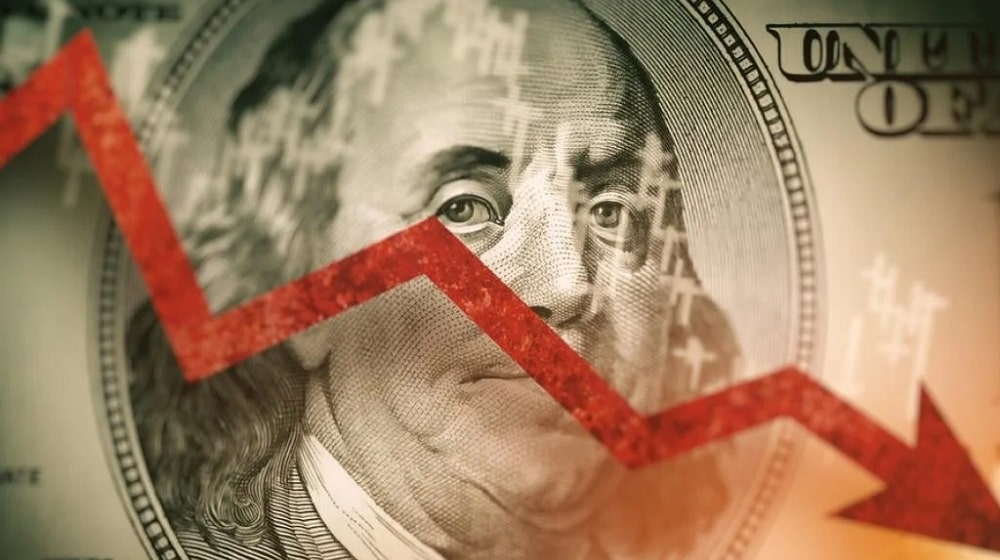
Pakistan’s dollar-denominated bonds plunged more than 13 cents on Monday in their steepest single-day decline since Russia’s full-scale invasion of Ukraine in early 2022.
The sharp drop followed escalating trade tensions triggered by US President Donald Trump’s renewed tariff threats, Reuters reported.
Investors pulled back amid growing macroeconomic uncertainty. Longer-dated bonds from countries such as Pakistan and Sri Lanka lost over 6 cents by mid-afternoon trading on Monday.
Hard-currency bonds issued by smaller, riskier economies faced severe pressure, with yields on many of them surging into double digits, highlighting rising concerns about debt sustainability.
Frontier markets reliant on commodity exports were also hit hard; bonds from Angola, Gabon, and Zambia each fell around 4 cents as oil prices declined and copper markets weakened.
The combination of US trade policy shocks and falling commodity prices has delivered a dual blow to vulnerable economies. The move toward safer assets left lower-rated sovereign issuers with widening spreads and shrinking liquidity.
In sub-Saharan Africa, international bond yields for nearly all issuers, except for higher-rated countries like Namibia and the Seychelles, surpassed 10 percent—a level often regarded as unsustainable for borrowing.
Pakistan already faces challenging funding conditions and could see further pressure on its external balances, including a reported $3.3 billion trade surplus with the US.
About the Author
Written by the expert legal team at Javid Law Associates. Our team specializes in corporate law, tax compliance, and business registration services across Pakistan.
Verified Professional
25+ Years Experience